There is something that happens in the silence before the Blessed Sacrament that cannot easily be put into words. Saints have described it. Mystics have written about it. Ordinary Catholics who have made it a habit will tell you simply: it changes you.
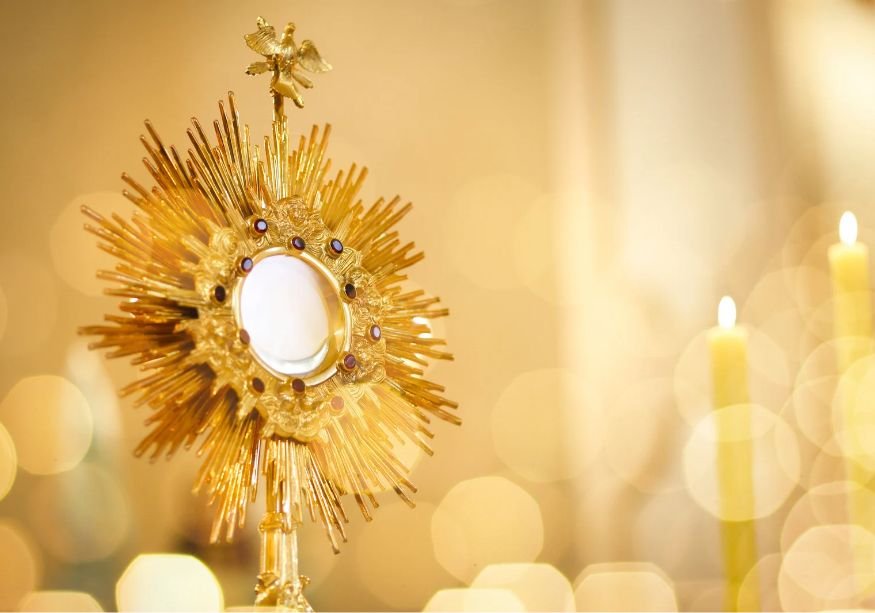
A Holy Hour is one hour of prayer spent in the presence of Jesus in the Eucharist — most often before the Blessed Sacrament exposed in a monstrance, or simply before the tabernacle in a quiet church. It is one of the oldest and most beloved forms of Catholic devotion, and it is available to anyone, regardless of how long you have been Catholic or how comfortable you feel with prayer.
This guide will walk you through everything you need to know — what a Holy Hour is, why it matters, how to prepare, and exactly how to structure your time so that it does not feel like an hour of staring at a wall.
What Is a Holy Hour?
A Holy Hour is simply one hour of intentional, focused prayer in the presence of Jesus in the Eucharist. The name comes from the Garden of Gethsemane, where Jesus asked His disciples: “Could you not watch with me one hour?” (Mt 26:40). That question, addressed to Peter on the night of the Lord’s agony, has echoed through the Church ever since as an invitation to every Catholic to give Christ one hour of their time.
The Holy Hour can take place during Eucharistic Adoration — when the Blessed Sacrament is exposed in a monstrance on the altar — or simply before the tabernacle in any Catholic church or chapel. Both are equally valid. What matters is not the setting but the intention: to be with Jesus, to listen, and to offer Him your time and your heart.
It is different from a quick visit to the church or a brief prayer before Mass. The one-hour commitment is deliberate. It is long enough to move past the restlessness of the first few minutes and enter into something deeper. Many people find that the first twenty minutes feel difficult, and then something shifts.
Why Do a Holy Hour?
Blessed Archbishop Fulton Sheen made the Holy Hour the cornerstone of his priestly life. He made it every single day for over fifty years and credited it with everything — his preaching, his writings, his peace of soul. He wrote: “The purpose of the Holy Hour is to encourage deep personal encounter with Christ.”
St. Teresa of Calcutta required her Missionaries of Charity to make a Holy Hour every day, even in the midst of their demanding work with the dying and destitute. She believed that without it, the work would become mere social service rather than an extension of the love of Christ.
The reasons to do a Holy Hour are both spiritual and very practical.
It deepens your relationship with Jesus
You cannot grow close to someone you never spend time with. The Holy Hour is extended, unhurried time with the Lord — the kind of time that allows a real relationship to form and deepen.
It brings interior peace
There is a reason people leave Adoration chapels looking different from when they entered. The peace that the Eucharistic presence of Christ radiates is not imaginary. It is real, and it is cumulative. Regular Holy Hours tend to produce people who are noticeably calmer, more patient, and less reactive.
It transforms your prayer life
Many Catholics find that their prayer everywhere else — at Mass, at home, in moments of difficulty — becomes richer and more alive after they have established a habit of Holy Hours. Spending time in silence before God teaches you how to listen, and that skill carries over into everything.
It is an act of reparation
The Church has long encouraged Holy Hours as acts of reparation — for our own sins, for the sins of the world, and in response to the loneliness of the Eucharistic Heart of Jesus, who remains present in thousands of churches around the world, often visited by very few. There is something quietly powerful about choosing to show up.
Before You Begin: Practical Preparation
Find out where and when Adoration is available
Many Catholic parishes have scheduled Adoration hours, and some have perpetual Adoration chapels open around the clock. If your parish does not offer Adoration, you can make your Holy Hour before the tabernacle in any Catholic church that is open during the day. A quick search for “Eucharistic Adoration near me” or a call to your parish office will help you find your nearest option.
What to bring
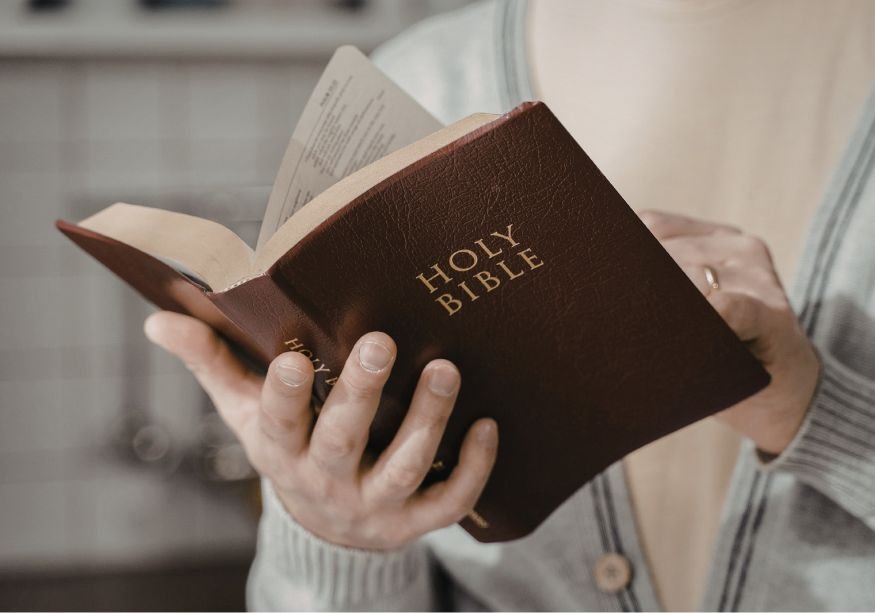
You do not need much. A Bible or a Catholic prayer book is helpful, particularly for the times when your mind goes blank and you need something to anchor your attention. A journal can be valuable for writing down what comes to mind during prayer — thoughts, resolutions, questions, or simply what you sense God may be saying to you. Beyond that, bring nothing. Leave your phone in your pocket or bag, turned to silent.
Arrive a few minutes early
Give yourself two or three minutes to settle before your hour begins. Sit down, take a breath, and make a simple act of faith — something as short as “Lord, I believe You are truly present here. I am here for You.” This brief transition from the noise of the day to the quiet of the chapel matters more than it might seem.
How to Structure Your Holy Hour
One of the most common reasons people feel intimidated by a Holy Hour is that they do not know what to do for a whole hour. The structure below is a suggestion, not a rule. Feel free to adapt it to your own rhythm and needs. Over time, as you make Holy Hours regularly, you will find your own natural flow.
The first fifteen minutes — settling and adoration
Begin by simply being present. Look at the Blessed Sacrament — or, if before the tabernacle, at the tabernacle itself — and let yourself arrive. Do not rush to fill the silence with words or petitions. Simply acknowledge that you are in the presence of God.
You might begin with a short vocal prayer such as the Divine Praises, an act of faith, or simply the words: “Jesus, I adore You.” Let the first few minutes be about worship rather than asking. Many people find it helpful to read slowly through a psalm of praise during this opening period — Psalm 95, Psalm 100, or Psalm 139 are particularly suited to Adoration.
The second fifteen minutes — Scripture and meditation
Take a short passage of Scripture — five to ten verses is enough — and read it slowly. Read it a second time. Then sit with it in silence. Ask the Lord what He wants to say to you through this passage today. Do not hurry on to the next thing. Let the words settle.
Good passages for Holy Hours include the Last Supper discourse in John 14-17, any of the healing miracles in the Gospels, Psalm 23, Isaiah 43:1-7, or the parable of the Prodigal Son in Luke 15. If you are following the daily Mass readings, you can use those instead — it is a beautiful way to extend the encounter you began at Mass.
The third fifteen minutes — personal prayer and conversation
This is the most personal part of the hour. Speak to Jesus as you would speak to a trusted friend — openly, honestly, without performance. Bring your concerns, your relationships, your fears, your gratitude. Bring the people you are worried about. Bring the things you are ashamed of. Bring your questions about your vocation, your decisions, your future.
Then — and this is the part most people skip — stop talking and listen. Sit in silence for a few minutes with an open, expectant posture. God speaks in many ways: through a Scripture verse that surfaces in your memory, through a sense of peace or direction, through the quiet stirring of conscience. You do not need to manufacture an experience. Simply remain open.
If you use a journal, this is the time to write.
The fourth fifteen minutes — intercession and closing prayer
Spend the final portion of your Holy Hour praying for others. Intercession is one of the most powerful forms of prayer and one of the most selfless ways to use your time before the Lord. Pray for your family, your friends, people who are sick or grieving, your parish, the Church, the world.
Close with a prayer of thanksgiving. A brief act of spiritual communion is a fitting way to end.
What If My Mind Wanders?
It will. This is not a sign that you are bad at prayer or that the Holy Hour is not working. Every saint who wrote about contemplative prayer acknowledged the wandering mind as a near-universal experience. St. Francis de Sales said that if you have to bring your heart back to God a hundred times in an hour, each return is itself an act of love.
When you notice that your mind has drifted — to your shopping list, a conversation from earlier, something you are anxious about — simply and gently return your attention to the Lord. No frustration, no self-criticism. Just a quiet return. Over time, the intervals between distractions tend to grow longer.
Some people find it helpful to keep a small notebook nearby specifically for practical thoughts that intrude during prayer. Writing them down quickly removes the mental pressure of trying to remember them, and frees your attention to return to God.
Tips for Making It a Regular Practice
Start with once a week
You do not need to commit to a daily Holy Hour immediately. Begin with once a week, at a consistent time. Consistency matters more than frequency when you are forming a new habit. Many parishes have a sign-up system for Adoration slots — committing to a specific hour each week creates external accountability that makes it easier to follow through.
Do not wait until you feel ready
The feeling of readiness rarely comes before the commitment. Go when you are tired, when you are distracted, when you do not feel particularly prayerful. The grace of the Holy Hour is not conditional on your emotional state when you arrive. You show up; God does the rest.
Let it be simple
There is no perfect Holy Hour. Some will feel rich and consoling. Others will feel dry and difficult. Both are valid. Both are fruitful. The measure of a good Holy Hour is not the quality of your feelings during it but the faithfulness of your presence. You came. You stayed. That is enough.
What the Saints Say About the Holy Hour
St. Peter Julian Eymard, known as the Apostle of the Eucharist, wrote: “The Eucharist is the secret of my day. It gives strength and meaning to all my actions.”
Blessed Carlo Acutis, the young Italian teenager who was beatified in 2020 and is beloved by young Catholics around the world, said: “The Eucharist is my highway to heaven.” He attended daily Mass and spent time in Adoration regularly, despite being a completely ordinary teenager in every other way. His life is a quiet argument that the Holy Hour is not reserved for priests, nuns, or the spiritually elite.
St. John Vianney, the Curé of Ars, spent hours before the Blessed Sacrament every day — and the fruits of his priestly life, the thousands of conversions, the wisdom in the confessional, the holiness that drew people from across France — are inseparable from those hours of silent prayer.
The consistent testimony of the saints is not that the Holy Hour is a spiritual technique or a productivity tool. It is that it is an encounter — with a Person who is truly present, who knows you by name, and who is waiting.
A Prayer Before the Blessed Sacrament
Lord Jesus, I come before You as I am — distracted, imperfect, and often unsure of how to pray. I believe that You are truly present here, Body, Blood, Soul, and Divinity, and I believe that You see me and know me and love me completely.
I give You this hour. I give You my wandering mind and my restless heart. I give You my worries and my gratitude, my sins and my hopes. Take what I offer and do with it what only You can do.
Teach me to be still. Teach me to listen. Teach me to love You the way You deserve to be loved — not with beautiful words alone, but with the gift of my time and my presence.
Stay with me, Lord, as I stay with You.
Amen.