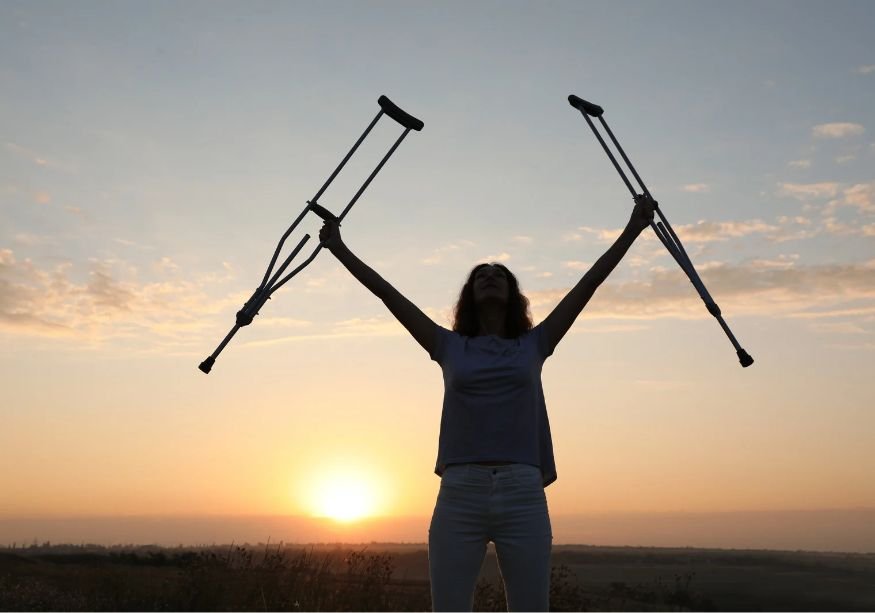
Most people have used the word miracle casually — a last-minute recovery, a narrow escape, an unexpected turn of events that defied all odds. But the Catholic tradition uses the word with far greater precision and depth. A miracle, properly understood, is not simply a fortunate coincidence or an emotionally moving experience. It is a specific kind of event with a specific relationship to God, to nature, and to faith.
This post explores what the Catholic Church actually teaches about miracles — what they are, why God works them, how the Church verifies them, and what they mean for your life of faith today.
The Catholic Definition of a Miracle
The Catechism of the Catholic Church does not give a single dictionary-style definition of a miracle, but Catholic theology has consistently understood a miracle as a sensible effect produced by God that surpasses the power of all created nature (CCC 156). In simpler terms: it is something that happens in the physical world that only God could have caused — something that natural forces, left to themselves, could not produce.
St. Thomas Aquinas, whose thinking has shaped Catholic theology more than any other thinker, defined a miracle as something done by God outside the order of the whole of created nature. This is an important distinction. A miracle is not simply something we cannot yet explain with science. It is something that, even with a complete understanding of natural law, would remain impossible by natural means alone.
Aquinas further distinguished three degrees of miracles. The first and highest degree involves something that nature can never do under any circumstances — for example, two bodies occupying the same space, or a person rising from the dead. The second degree involves God doing something that nature can do, but not in this way or at this time — for example, a sudden and complete cure of a disease that medicine would require months or years to address. The third degree involves God producing an effect that nature could produce, but without using the natural means — for example, rain falling without the normal meteorological conditions.
This framework is not just philosophical hair-splitting. It matters because it protects the integrity of both faith and reason. The Catholic Church does not ask you to call everything mysterious a miracle, nor does it ask you to reduce every miracle to something science will eventually explain. It holds both truths together.
Why Does God Work Miracles?
A miracle is never an end in itself. God does not perform miracles to show off or to satisfy curiosity. In Catholic teaching, miracles always serve a purpose that is ordered toward salvation — toward bringing people into a relationship with Him, confirming the truth of the faith, or expressing His love and mercy in a particular situation.
To Confirm the Truth of Revelation
This is the primary purpose of miracles as understood in Catholic theology. The First Vatican Council taught that miracles are signs given by God so that the submission of faith would be in accordance with reason. They are not a replacement for reason but a confirmation given to reason that the messenger and the message are genuinely from God.
This is why miracles accompany the greatest moments of revelation in Scripture — the Exodus, the ministry of the prophets, and above all the life, death, and Resurrection of Jesus Christ. The Resurrection itself is the miracle on which all of Christianity stands. As St. Paul writes: “If Christ has not been raised, your faith is futile” (1 Cor 15:17).
To Provoke and Strengthen Faith
Throughout the Gospels, Jesus works miracles in response to faith and in order to deepen it. He heals the blind man, raises Lazarus, calms the storm — and in each case the event is an invitation to believe more deeply in who He is. At the same time, miracles are never coercive. The Pharisees witnessed the same miracles as the disciples and refused to believe. A miracle opens a door; it does not force anyone through it.
To Express God’s Compassion
Many of the miracles of Jesus are simply acts of mercy. He heals the leper not to make a theological point but because He is “moved with compassion” (Mk 1:41). He raises the widow’s son at Nain without being asked, simply because He sees her grief. Miracles in this sense are windows into the heart of God — they show us that He sees individual suffering and is willing to intervene in it.
Miracles in Scripture
The Bible is saturated with miraculous events from the first page to the last. Understanding a few key categories helps to see the breadth of what Scripture presents.
Old Testament Miracles
The miracles of the Old Testament are largely connected to the identity and liberation of the people of God. The parting of the Red Sea (Ex 14), the manna in the desert (Ex 16), the fire that fell on Elijah’s altar at Mount Carmel (1 Kings 18), and the healing of Naaman the leper through Elisha (2 Kings 5) — these are not isolated curiosities. They are signs of God’s active presence with His people, His power over creation, and His faithfulness to His covenant.
The Miracles of Jesus
The Gospels record at least 37 distinct miracles of Jesus. They fall into four broad categories: healings (the blind, the lame, the lepers, the deaf), exorcisms (the casting out of demons), nature miracles (calming the storm, walking on water, multiplying loaves and fish), and resurrections (Jairus’s daughter, the widow’s son, Lazarus — and of course His own).
Each category reveals something specific about who Jesus is. The healings show His power over the consequences of sin and suffering. The exorcisms show His authority over evil. The nature miracles show His lordship over creation. And the resurrections — culminating in His own — show His power over death itself, the last enemy.
Miracles in the Early Church
The Acts of the Apostles makes clear that miracles did not end with the Ascension of Jesus. Peter heals a lame man at the Temple gate (Acts 3), Paul raises Eutychus from the dead (Acts 20), and healings and signs continue throughout the early Church’s mission. The Catechism notes that these signs confirm that “the apostolic proclamation is true” (CCC 156) — miracles serve the spread of the Gospel.
How the Catholic Church Verifies Miracles
One of the things that distinguishes the Catholic Church from many other traditions is its rigorous, systematic process for evaluating alleged miracles. The Church does not accept claims of miraculous events easily or on the basis of popular enthusiasm. It investigates them carefully, often over many years, using both theological and scientific criteria.
Miracles in the Canonisation Process
The most well-known context for official miracle verification is the process of declaring someone a saint. Before a person can be beatified or canonised, at least one miracle — occurring after their death and attributed to their intercession — must be verified. For canonisation, a second miracle is required.
The process is exhaustive. Medical records are examined by panels of independent doctors who assess whether the cure has a natural explanation. Only when the medical commission concludes that the cure is scientifically inexplicable does the case pass to a theological commission, which then evaluates whether the cure can be attributed to the intercession of the specific candidate for sainthood. The standard is not “we cannot explain this yet” but “this cannot be explained by any natural means.”
Eucharistic Miracles
Another category of miracles the Church investigates are Eucharistic miracles — cases in which the consecrated Host has appeared to change in a physically visible way. The most scientifically studied of these is the miracle of Lanciano in Italy, where a Host is said to have transformed into flesh and blood in the eighth century. Scientific analyses conducted in the twentieth century found the flesh to be human cardiac muscle tissue and the blood to be human blood of type AB — the same blood type found on the Shroud of Turin. The Church has not made a binding pronouncement requiring belief in Lanciano, but it has approved devotion connected to it.
Apparitions and Healings at Shrines
Lourdes in France is perhaps the most rigorously documented site of miraculous healings in history. Since 1858, the Church has officially recognised 70 miracles at Lourdes after investigation by the Lourdes Medical Bureau, which examines reported cures using a strict scientific protocol. Thousands of other cases have been studied and set aside — not because they were dismissed, but because they did not meet the full criteria. The 70 that have been accepted are considered medically inexplicable, permanent, and instantaneous.
Common Questions About Miracles
Does God Still Work Miracles Today?
Yes. The Catholic Church has never taught that miracles ceased after the apostolic age — a view called cessationism that is held by some Protestant traditions. The ongoing canonisation process, with its requirement of verified miracles, is itself a standing institutional statement that God continues to work miraculously in the world. The healings at Lourdes, Eucharistic miracles, and countless personal testimonies across the centuries all point in the same direction.
Why Doesn’t God Work Miracles More Often?
This is one of the most honest and painful questions a person of faith can ask — especially when you have prayed for something desperately and not received it. The Catholic tradition does not offer a simple answer, because there is not one. What it does offer is a framework.
God is not a vending machine. He does not grant every request for miraculous intervention, not because He is indifferent, but because He sees what we cannot see. The Catechism reminds us that God “does not abandon his creatures to themselves” (CCC 301) — but His care is expressed in many ways, not all of them miraculous in the technical sense. The greatest miracle ever worked — the death and Resurrection of Jesus Christ — looked like failure and abandonment from the outside. God’s ways are not our ways (Is 55:8).
Is It Wrong to Ask God for a Miracle?
Not at all. Jesus explicitly invites persistent, trusting prayer: “Ask and it will be given to you; seek and you will find; knock and the door will be opened to you” (Mt 7:7). The saints have always prayed with boldness and urgency for divine intervention. The Church’s entire tradition of intercessory prayer — praying to the saints, making novenas, visiting shrines — is built on the conviction that God listens and responds to prayer. Asking for a miracle is an act of faith, not presumption.
What About False Miracles?
Jesus Himself warns that false prophets will perform signs and wonders (Mt 24:24). The Catholic tradition has always acknowledged that not every claimed miracle is genuine — some are fraudulent, some are the product of self-deception, and some, according to Scripture and the Church Fathers, may involve diabolical imitation. This is precisely why the Church insists on rigorous discernment rather than credulity. A genuine miracle, properly verified, will always be consistent with the faith, ordered toward God’s glory, and accompanied by the fruit of genuine conversion and holiness.
What Miracles Mean for Your Faith
Miracles are not just events that happened in the past or that happen to other people in faraway places. They are invitations — addressed to you personally — to open your eyes to the reality of God’s active presence in the world.
The greatest miracle most Catholics have access to is not at Lourdes. It is at their local parish, at every Mass. The Catholic Church teaches that at the words of consecration, the bread and wine truly become the Body and Blood of Jesus Christ — not symbolically, not metaphorically, but really and truly. If you believe this — and the Church asks you to believe it — then you are already living inside a miracle every time you receive Holy Communion.
Miracles also invite a particular disposition of the heart: wonder. A life of faith is not meant to be flat or routine. The same God who parted the Red Sea, who raised Lazarus, who rose from the dead on the third day, is present to you now — in prayer, in the sacraments, in the Word of Scripture, and in the people He has placed in your life. He is not less powerful than He was. He is not less interested in you than He was in those He healed in Galilee.
The question miracles put to each of us is not primarily “did this really happen?” It is the same question Jesus put to the blind man He healed: “Do you believe?” (Jn 9:35).
A Prayer for Open Eyes
Lord Jesus, You are the same yesterday, today, and forever. You who opened the eyes of the blind, cleansed the leper, raised the dead, and conquered the grave — You are present here, now, in this moment of my life.
Forgive me for the times I have reduced You to a comfortable idea rather than the living God who acts in history. Open my eyes to see Your hand at work in my life. Give me the faith to ask boldly, the trust to wait patiently, and the wisdom to recognise Your presence even when it comes in ways I did not expect.
And if it is Your will, Lord — work a miracle. Not so that I can boast of it, but so that I and those around me may know with greater certainty that You are real, that You are near, and that nothing is impossible for You.
Amen.