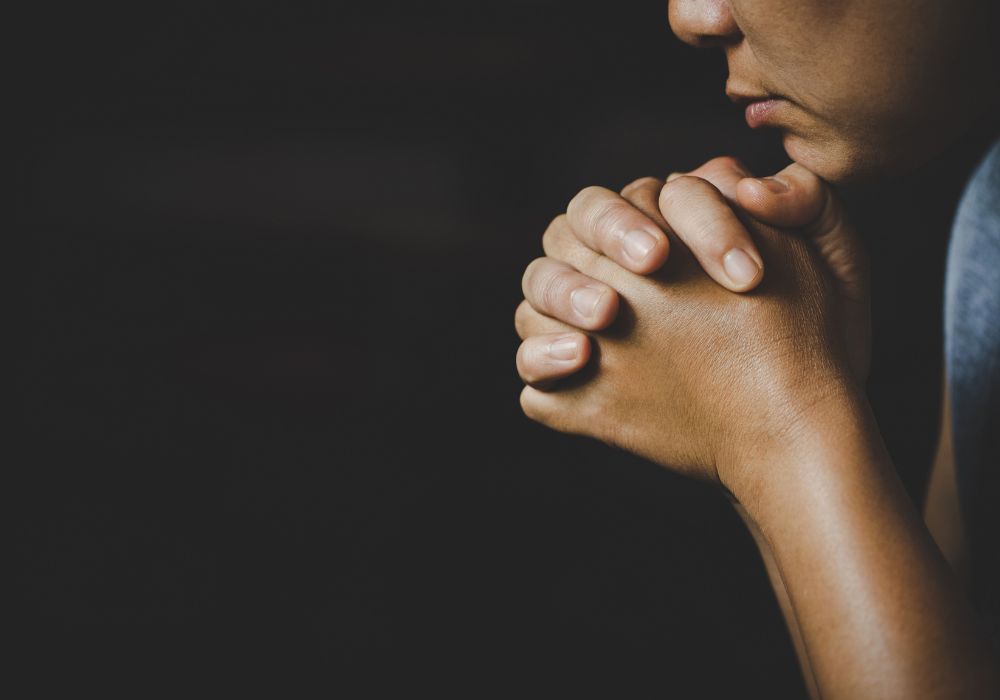
In the Catholic tradition, prayer is not an optional add-on to the spiritual life. It is the spiritual life. Without prayer, faith becomes a set of beliefs held in the head but never lived in the heart. With prayer, even the most ordinary day becomes an encounter with the living God.
This post explores what the Church teaches about prayer, how to build a practical habit of daily prayer, what gets in the way, and what happens when prayer is given its proper place in your life.
Understanding the Role of Prayer in Catholicism
The Catechism of the Catholic Church defines prayer as “the raising of one’s mind and heart to God” (CCC 2559). It is not primarily about saying words — it is about relationship. Prayer is how a Catholic stays in living contact with the Father, the Son, and the Holy Spirit throughout the day.
The Church identifies several forms of prayer, each of which has a place in the daily life of a Catholic. Blessing and adoration acknowledge who God is. Petition brings our needs before Him. Intercession places the needs of others in His hands. Thanksgiving expresses gratitude for His gifts. And praise glorifies God simply because He is God, asking nothing in return.
Jesus Himself modelled a life of constant prayer. He prayed before major decisions (Lk 6:12), in moments of anguish (Lk 22:44), at meals (Jn 6:11), early in the morning (Mk 1:35), and on the Cross (Lk 23:34). His life reveals that prayer is not a task to be completed but a posture to be maintained.
St. Paul’s instruction to “pray without ceasing” (1 Thess 5:17) is not a command to spend every waking moment on your knees. It is an invitation to live in an ongoing awareness of God’s presence — to bring Him into your work, your conversations, your struggles, and your joys. This is what the Church means when it speaks of the universal call to holiness: every Catholic, in every state of life, is called to this kind of prayerful union with God.
Practical Tips for Daily Prayer
Knowing that prayer matters is one thing. Actually praying every day is another. The saints are unanimous on this point: prayer requires commitment, structure, and a certain stubbornness in showing up even when you do not feel like it.
Start with a fixed time. The most reliable way to build a prayer habit is to attach it to an existing anchor in your day — first thing in the morning before you look at your phone, during your lunch break, or in the quiet after the children are in bed. The specific time matters less than the consistency.
Start small and build slowly. Five minutes of genuine, attentive prayer is worth more than thirty minutes of distracted obligation. Begin with what you can sustain and let it grow naturally over weeks and months.
Use the Church’s own treasury of prayer. Catholics are blessed with an extraordinary inheritance — the Liturgy of the Hours, the Rosary, Lectio Divina, the Examen of St. Ignatius, novenas, and the traditional morning and evening prayers. These are not crutches for those who cannot pray freely. They are the accumulated wisdom of centuries of saints, given to you as a gift.
Make Scripture part of your prayer. Open the Gospel for the day, read slowly, and sit with one line that strikes you. Ask the Lord what He is saying to you through it. This simple practice, done consistently, will change the way you read the Bible and the way you hear God’s voice.
Bring prayer into the ordinary moments. The sign of the Cross before a meal. A brief “Lord, have mercy” in a moment of frustration. A quiet “thank you” when something goes well. These small acts are real prayer. They slowly transform the whole day into an ongoing conversation with God.
Overcoming Barriers to Daily Prayer
If daily prayer were easy, every Catholic would already be doing it. The obstacles are real, and the Church does not pretend otherwise.
The most common barrier is the feeling that there is no time. But time is rarely the real issue. Most people find time for what they have decided is important. The more honest question is whether prayer has been given the same weight as other daily necessities. St. Francis de Sales, who served as a bishop and spiritual director to thousands, said that he prayed for half an hour each morning — but on days when he was especially busy, he prayed for a full hour. The busier the day, the greater the need.
Distraction during prayer is another near-universal struggle. Thoughts wander. Lists form in your head. The mind refuses to be still. The saints experienced this too — St. Teresa of Ávila wrote candidly about years of distracted prayer. The response is not to give up but to gently return your attention to God each time it drifts. That act of returning is itself a form of prayer.
Dryness and the sense that God is absent or silent is perhaps the most discouraging barrier of all. Many Catholics abandon prayer at precisely the moment when persevering through dryness would deepen their faith most. The Catechism addresses this directly, calling it a normal and even necessary part of the spiritual life (CCC 2729-2731). God’s apparent silence is not rejection. It is often an invitation to a more mature and less emotion-dependent faith.
Finally, there is the weight of guilt over an inconsistent prayer life. Many Catholics carry a quiet shame about how rarely they pray, which paradoxically makes it harder to begin again. The remedy is simple: start now. Do not wait for the right conditions or the perfect moment. Return to prayer the way a child returns to a parent — without elaborate explanations, simply coming back.
The Impact of Daily Prayer on Spiritual Growth
The effects of a consistent prayer life are not always dramatic. They are usually quiet, cumulative, and noticed more clearly in retrospect than in the moment. But they are real.
Prayer clarifies priorities. When you begin the day in God’s presence, the things that seemed urgent often reveal themselves as trivial, and the things you were tempted to ignore often turn out to be what matter most. Regular prayer slowly reorders your inner life around what is true and lasting rather than what is immediate and loud.
Prayer increases peace. This is not a peace that depends on circumstances going well. It is the deeper peace that St. Paul describes as surpassing all understanding (Phil 4:7) — a peace that holds even in difficulty, because the person who prays regularly has learned to place their trust in Someone greater than their problems.
Prayer conforms us to Christ. This is the ultimate goal of the Catholic spiritual life. Through consistent, faithful prayer — through listening as well as speaking, through silence as well as words — the soul is gradually shaped into the likeness of Jesus. The rough edges of pride, impatience, and self-centredness are worn down not by effort alone but by sustained exposure to the love and holiness of God.
The saints who are held up for our imitation — whether Francis of Assisi, Thérèse of Lisieux, John Paul II, or Mother Teresa — were, without exception, people of deep and disciplined prayer. Their holiness was not the cause of their prayer life. It was the fruit of it.
Daily prayer is not a guarantee of an easy life. It is a guarantee of a life lived in the presence of God — and that changes everything.
A Prayer for a Faithful Daily Prayer Life
Lord, teach me to pray as I ought. On the days when I come to you with a full heart, receive my praise. On the days when I come with empty hands and scattered thoughts, receive my willingness. On the days when I do not come at all, draw me back. Let my prayer not be a performance for my own consolation, but a true turning of my heart toward you. Make me faithful in small things. In the silence, speak. In the dryness, sustain. And in all things, let me know that you are near. Amen.