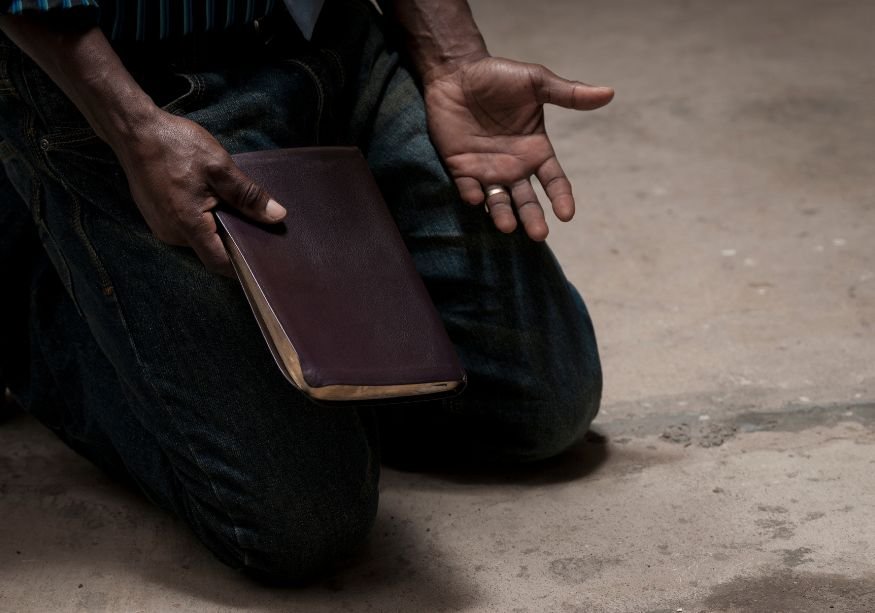
At some point, many Catholics find themselves asking a question that is simple on the surface but profound underneath: what does it actually mean to give your life to God? Not in a vague, theoretical sense — but in a real, daily, concrete way.
It is a question that can arise after a retreat, after a loss, after a conversion experience, or simply after years of going through the motions of faith and feeling that there must be something more. Whatever brought you here, the question itself is already a sign that the Holy Spirit is at work in you.
This post explores what giving your life to God means from a Catholic perspective — what it involves, what it does not involve, and how to begin.
It Is Not a Single Moment – It Is a Direction
In some Christian traditions, giving your life to God is understood as a one-time decision-— a moment at an altar call or a specific prayer that marks a before and after. There is something true and beautiful in that understanding. But the Catholic tradition holds something richer and, in many ways, more demanding.
For Catholics, giving your life to God is less a single event and more a direction – a fundamental orientation of the will that must be renewed every day, sometimes every hour. It begins at Baptism, where you were claimed by God before you were old enough to understand it. It is deepened at Confirmation, at every Mass, at every confession, and in every ordinary moment where you choose God’s will over your own.
St. Thérèse of Lisieux called this the Little Way – the path of giving yourself to God not in grand gestures but in small, faithful acts of love repeated daily. Mother Teresa described it as doing ordinary things with extraordinary love. The saints understood that the total gift of self to God is not accomplished in a moment. It is the work of a lifetime.
This does not mean the moment of decision is unimportant. It matters enormously. But it is the beginning of a journey, not the destination.
What You Are Actually Giving
When Catholics speak of giving their lives to God, they mean something total. Not just their Sunday mornings. Not just their prayer time. Not just the parts of themselves they are comfortable with. The invitation of the Gospel is to place everything – your plans, your relationships, your ambitions, your wounds, your fears, your future – into God’s hands.
St. Paul captures this with startling directness:
“I appeal to you therefore, brothers and sisters, by the mercies of God, to present your bodies as a living sacrifice, holy and acceptable to God, which is your spiritual worship.” (Rom 12:1).
A living sacrifice. Not a dead one brought to an altar once. A living one – ongoing, daily, embodied.
This means your work belongs to God. Your marriage or your celibacy belongs to God. Your health and your illness belong to God. Your gifts and your limitations belong to God. Your time, your money, your attention, and your energy belong to God. Giving your life to God means gradually — and it is always gradually — surrendering the illusion that any of it was ever truly yours to begin with.
The Catechism puts it this way: “The desire for God is written in the human heart, because man is created by God and for God; and God never ceases to draw man to himself.” (CCC 27). To give your life to God is simply to stop resisting what you were made for.
What It Does Not Mean
There are several misunderstandings worth clearing up, because they keep people from taking this step.
Giving your life to God does not mean becoming a priest or a religious sister. The call to total self-gift belongs to every baptised Catholic, not only those in consecrated life. The layperson who raises children in the faith, who works with honesty and integrity, who loves their neighbour faithfully — they are giving their life to God just as fully as any monk or nun.
It does not mean your personality disappears. God does not want a version of you that has been flattened into colourless piety. He wants you — your particular temperament, your sense of humour, your specific gifts, your unique history. Grace builds on nature, as the Thomistic tradition teaches. God perfects what He finds; He does not erase it.
It does not mean life will become easy. In fact, Scripture suggests the opposite is often true. “If any want to become my followers, let them deny themselves and take up their cross daily and follow me.” (Lk 9:23). The cross is not optional in the Christian life. But it is the cross that leads to resurrection.
And it does not mean you have to feel ready. Almost no one does. The disciples were ordinary men with ordinary fears and failures. Peter denied Christ three times. Thomas doubted. Paul persecuted the Church before he preached it. God does not wait for you to be ready. He meets you exactly where you are.
How to Begin – Practically
If you feel the pull to give your life more fully to God but are not sure where to start, here are some concrete steps rooted in the Catholic tradition.
Make a conscious act of surrender
Pray deliberately and specifically. Tell God in your own words that you want to give Him your life — that you want His will more than your own. You do not need special language. The sincerity of the intention is what matters. The Morning Offering is a traditional Catholic prayer that does exactly this and can be prayed at the start of every day.
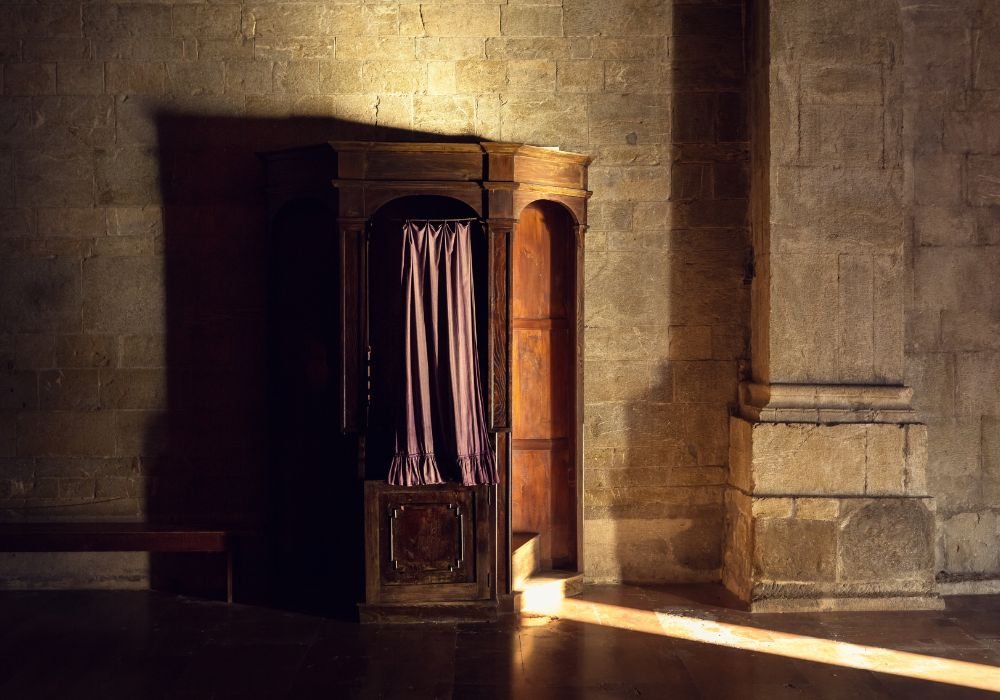
Go to confession
If you have been away from the sacraments or if there is unconfessed sin weighing on you, confession is the place to begin again. The grace of absolution is not just forgiveness — it is a genuine renewal of your relationship with God. Starting fresh matters.
Participate in the Eucharist
The Eucharist is the source and summit of the Catholic life (CCC 1324). If you want to give your life to God, placing yourself at the altar alongside Christ’s own self-offering is the most powerful thing you can do.
Build a daily prayer habit
Even ten minutes a day of quiet prayer – Scripture reading, or simply sitting in silence before God – begins to reshape the interior life. What we give regular attention to grows. Give God your attention, and your relationship with Him will grow.
Find a spiritual director
The Catholic tradition has always valued the guidance of a wise, experienced person on the spiritual journey. A spiritual director is not a therapist or a life coach – they are someone who helps you discern what God is doing in your life and how to respond. If you do not have one, ask your parish priest or contact your diocesan office.
Expect resistance
When you make a genuine decision to give your life to God, you will likely encounter resistance – from your own habits and fears, and sometimes from the enemy of your soul. Do not be surprised by this. It is a sign you are moving in the right direction. Stay close to the sacraments, to prayer, and to a community of faith.
What God Does With What You Give
Here is what the Gospel makes clear: God does not receive your life and leave it as He found it. He transforms it.
This is the pattern across all of Scripture. He takes five loaves and two fish and feeds thousands. He takes water and makes wine. He takes a persecutor named Saul and makes him the greatest missionary the Church has ever known. He takes the cross – the instrument of humiliation and death – and makes it the sign of salvation for all humanity.
What you bring to God does not need to be impressive. It does not need to be whole. The widow’s mite, the mustard seed, the lost sheep who finally turns around – these are His preferred raw materials. He is not looking for greatness. He is looking for availability.
“For I know the plans I have for you, says the Lord, plans for your welfare and not for harm, to give you a future with hope.” (Jer 29:11).
The life you give to God is returned to you — not diminished but enlarged. Not constrained but freed. Not emptied but filled with something that does not pass away.
A Prayer of Surrender
Lord God, I come before You as I am, not as I wish I were, but as I am. I bring You my fears and my failures, my plans and my uncertainties, the parts of my life I hold tightly and the parts I do not know what to do with.
I want to give You my life. Not just the edges of it, not just the hours I set aside for prayer, but all of it – my work, my relationships, my future, my will.
I know I cannot do this perfectly. I know I will take things back and have to surrender them again. But today, in this moment, I choose You. I choose Your will over mine. I choose Your kingdom over my comfort.
Take what I have offered and do with it what only You can do. Make my life what You always intended it to be. And give me the grace to keep saying yes to You — today and every day that follows.
Through Christ our Lord. Amen.