Many Catholics grow up hearing the Bible proclaimed at Mass every Sunday, yet never actually sit down and read it on their own. It can feel overwhelming — where do you start? Which translation do you use? How do you understand what you are reading? And does it even matter if you already go to Mass?
The answer to that last question is yes — it matters enormously. Scripture is not just a liturgical text to be heard once a week. It is the living Word of God, and it is addressed personally to you. This guide will walk you through everything you need to begin reading the Bible as a Catholic — practically, confidently, and fruitfully.
Why Catholics Should Read the Bible
There is a common misconception — sometimes held by Catholics themselves — that Bible reading is a Protestant practice and that Catholics have the Church and the sacraments instead. This is a false divide. The Second Vatican Council’s document Dei Verbum states clearly that “ignorance of Scripture is ignorance of Christ.” The Church does not place Scripture and tradition in opposition — she holds them together as a single sacred deposit of the Word of God.
Reading the Bible does several things that nothing else quite replicates. It gives you direct access to the words and actions of Jesus. It deepens your understanding of the Mass, where every prayer, every reading, and every gesture is saturated with Scripture. It strengthens your prayer life by giving you the language of God Himself. And it forms your conscience and your character over time in ways that are quiet but profound.
St. Jerome, one of the greatest Scripture scholars in the history of the Church, translated the entire Bible into Latin and spent decades studying it. He wrote: “When we pray, we speak to God. But when we read the Scriptures, God speaks to us.” That exchange — God speaking to you through His Word — is what is on offer every time you open the Bible.
Which Bible Should a Catholic Use?
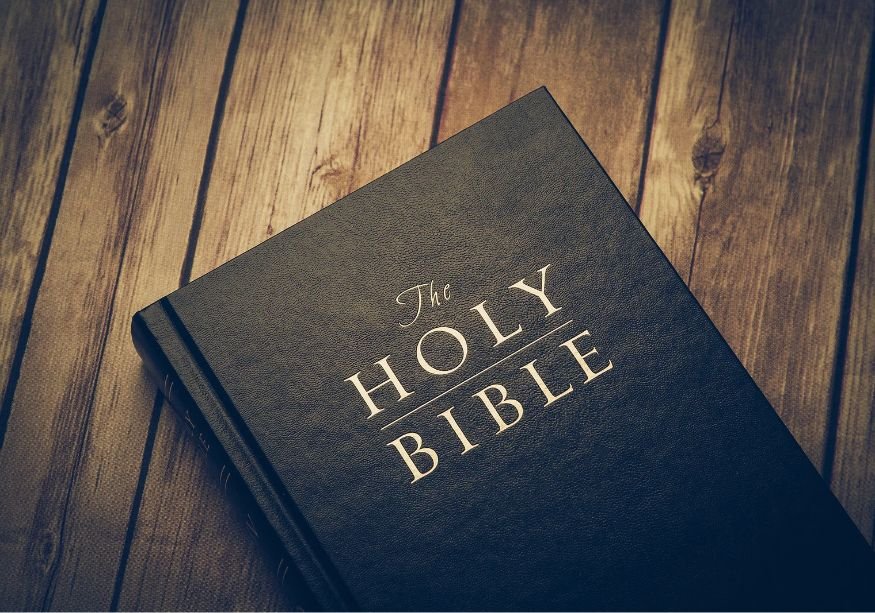
Not all Bibles are the same. A Catholic Bible contains 73 books, while most Protestant Bibles contain 66. The seven additional books — Tobit, Judith, 1 and 2 Maccabees, Wisdom, Sirach, and Baruch — are called the deuterocanonical books and are part of the Catholic canon. If you pick up a Bible from a non-Catholic bookshop, these books may be missing.
Recommended Catholic Translations
The New Revised Standard Version — Catholic Edition (NRSV-CE) is widely used in Catholic academic and liturgical settings. It is accurate, readable, and includes all 73 books.
The New American Bible Revised Edition (NABRE) is the translation used at Mass in the United States and is freely available online at usccb.org. It comes with helpful footnotes and is an excellent study Bible.
The Jerusalem Bible and its updated version, The New Jerusalem Bible, are popular in many English-speaking Catholic communities, especially outside the United States. They are known for their literary quality and rich footnotes.
The Revised Standard Version — Catholic Edition (RSV-CE) is a favourite among many Catholic scholars and is used in the Ignatius Study Bible, one of the best annotated Catholic Bibles available.
If you are just starting out, any of these will serve you well. The most important Bible is the one you will actually open.
Where to Start Reading
This is the question most beginners get stuck on. The instinct is often to start at Genesis chapter one and read straight through to Revelation. This is not the best approach for most people. The Bible is not a single book — it is a library of 73 books written across centuries in different genres, cultures, and languages. Reading it cover to cover without context can leave you lost, confused, and discouraged by the time you reach Leviticus.
Start with the Gospels
The best starting point for a Catholic is the Gospel of Mark. it is the shortest and most immediate of the four Gospels.
After Mark, move to the Gospel of Mark — written with a theological depth and a personal warmth that draws the reader directly into a relationship with Jesus. Read it slowly, a chapter at a time, and allow the words to settle.
Then Luke, then Matthew. Reading all four Gospels gives you a full picture of who Jesus is, what He said, and what He did.
Then Move to the Letters of Paul
After the Gospels, the letters of St. Paul are among the most accessible and spiritually rich parts of the New Testament. Begin with Philippians — it is short, joyful, and personal. Then Romans, which is Paul’s most systematic presentation of the Gospel. Then Ephesians, Galatians, and Colossians.
Then the Old Testament
Once you have a foundation in the New Testament, the Old Testament opens up in a new way — you begin to see how everything points toward Christ. A good entry point into the Old Testament is the Psalms, which can also be prayed daily as a form of personal prayer. Then Genesis, Exodus, and the prophets.
How to Read the Bible as a Catholic
Knowing which book to read is only part of the question. How you read matters just as much.
Read It as the Word of God, Not Just a Historical Text
The Catholic Church teaches that Scripture is both a human and a divine document. It was written by human authors in specific historical contexts — and those contexts matter. But it was also inspired by the Holy Spirit, which means it carries a meaning that transcends its historical moment and speaks directly to you today. Come to the Bible with the expectation that God wants to say something to you through it.
Read It Within the Church
Catholics do not read Scripture alone. The Church — through her tradition, her saints, her councils, and her Magisterium — is the authoritative interpreter of Scripture. This does not mean you cannot draw personal meaning from what you read. It means you read within a community of interpretation that stretches back two thousand years, and you trust that community to guard against misreading.
Read It Prayerfully — Lectio Divina
The ancient Catholic practice of Lectio Divina — Latin for “divine reading” — is one of the most fruitful ways to engage with Scripture. It involves four movements:
Lectio (Read): Read the passage slowly, once or twice. Pay attention to any word or phrase that catches your attention.
Meditatio (Meditate): Sit with that word or phrase. Repeat it quietly. Let it speak to your current circumstances. Ask what God might be saying to you through it.
Oratio (Pray): Respond to God in prayer. This does not need to be formal. Speak to Him from what you have just read — gratitude, petition, sorrow, praise.
Contemplatio (Contemplate): Rest in God’s presence. Not doing, not thinking — simply being with Him in the quiet.
Even ten minutes of Lectio Divina with a single passage will do more for your interior life than an hour of rushed reading.
Read It Consistently
The key to growing in Scripture is not how much you read at once — it is how regularly you return to it. A chapter a day, read slowly and prayerfully, will transform your interior life over the course of a year far more than occasional long sessions. Attach it to something you already do each day — morning coffee, lunch, the fifteen minutes before bed. Make it a habit rather than an event.
Tools That Will Help You
A Good Study Bible
A study Bible includes footnotes, cross-references, and introductions to each book that give you the historical and theological context you need to understand what you are reading. The Ignatius Catholic Study Bible (RSV-CE), compiled by Scott Hahn and Curtis Mitch, is among the best available. The Catholic Study Bible (NABRE) published by Oxford is another excellent option.
The Liturgy of the Hours
The Liturgy of the Hours — the Church’s official daily prayer — is built almost entirely from Scripture, particularly the Psalms. Praying it morning and evening is one of the most natural ways to immerse yourself in the Bible. The iBreviary and Universalis apps make it accessible on any phone.
Follow the Mass Readings
The Catholic Church has a three-year lectionary cycle that takes you through the majority of the New Testament and large portions of the Old Testament at Mass. Reading the daily Mass readings each morning — even five minutes before or after — connects your personal Scripture reading to the prayer of the whole Church. The Magnificat app or the USCCB website provides these daily.
Common Mistakes to Avoid
Reading for Information Rather Than Formation
The Bible is not primarily a source of facts to accumulate. It is a living encounter with a Person. If you approach it the way you approach a textbook — trying to get through it, absorb data, finish chapters — you will miss the point entirely. Read less, more slowly, more prayerfully. Let it form you rather than inform you.
Reading Without Any Context or Guidance
Pulling a verse out of context and building a life decision around it is a mistake. Scripture has to be read in context — the context of the passage, the book, the Testament, and the whole of Sacred Tradition. Use footnotes.
Waiting Until You Feel Ready
Many Catholics put off reading the Bible because they feel they need to know more theology first, or attend a course, or find the perfect translation, or have more time. None of these conditions are required. You do not need to be a theologian to hear God speak to you through His Word. You need only to open it and ask the Holy Spirit to guide you. Start today, with whatever you have.
A Prayer Before Reading Scripture
Lord Jesus, You are the Word of God made flesh. As I open these pages, I ask You to open my heart. Send Your Holy Spirit to be my guide — to illuminate what I do not understand, to soften what is hard in me, and to speak into the places where I most need to hear Your voice.
I do not come to this as an expert. I come as a child, ready to listen. Let Your Word take root in me and bear fruit — in my prayer, in my choices, in the way I love the people around me.
Speak, Lord. Your servant is listening.
Amen.